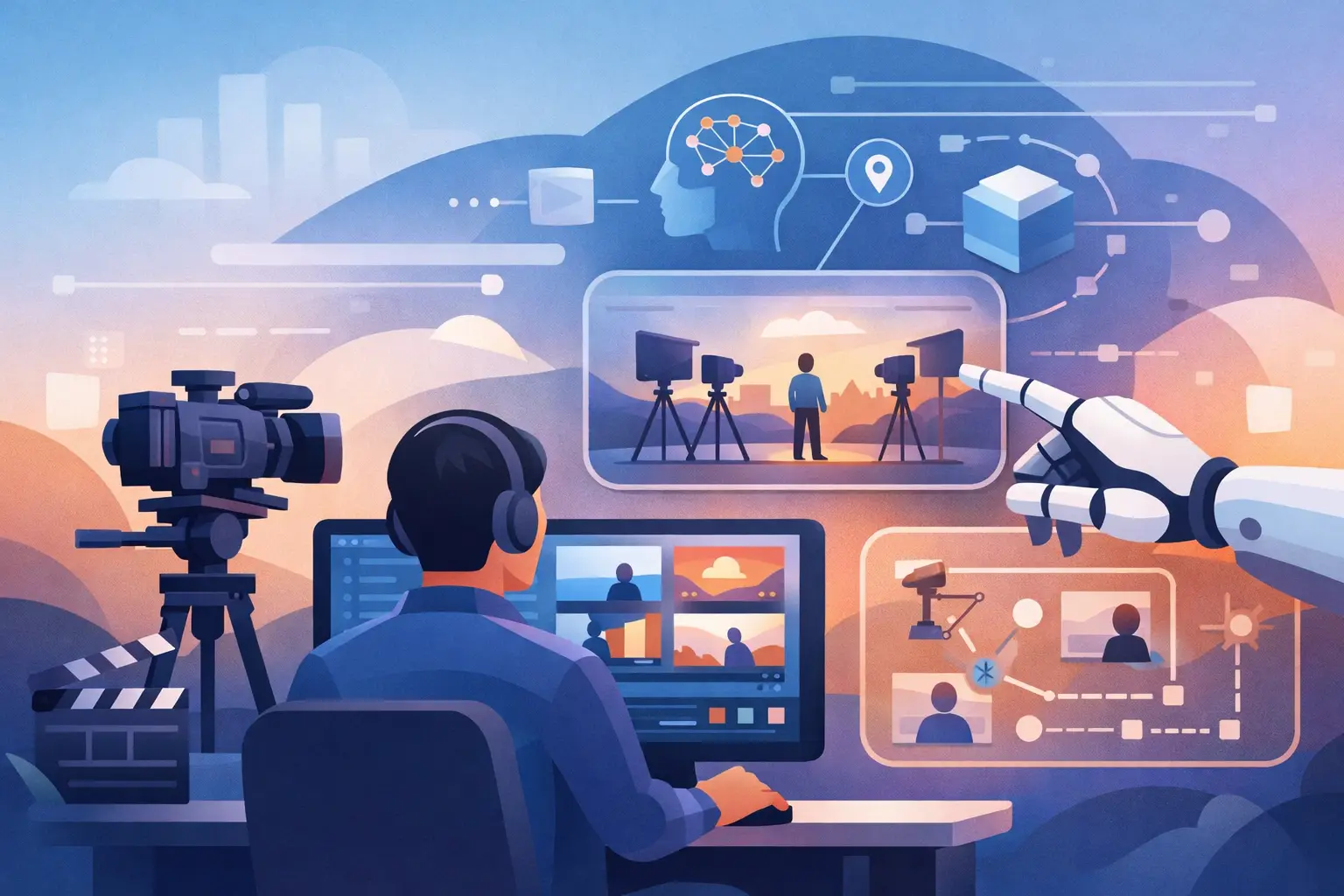
A shot list usually breaks down at the exact moment a script starts getting real. What looked clear on the page suddenly raises practical questions - where the scene turns, what coverage is essential, how many setups the day can actually support, and which visual choices are doing story work versus adding cost. That is where ai assisted shot planning becomes useful. Not as a replacement for directorial judgment, but as a faster way to translate screenplay intent into production-ready visual structure.
For filmmakers working under deadline, that speed matters. Independent teams do not have the luxury of spending weeks moving from script analysis to boards, camera concepts, coverage logic, and scheduling implications. Producers need a plan they can budget. Directors need something they can shape. Writers need to see whether the visual language supports the script they wrote. AI can compress that early-stage thinking and surface a first-pass shot strategy while there is still time to improve it.
What ai assisted shot planning actually does
At its best, ai assisted shot planning turns screenplay information into a visual planning framework. It reads scene action, tone, location, character dynamics, and dramatic beats, then proposes camera angles, coverage patterns, and scene-level visual logic. That may include wide shots for geography, mediums for dialogue tension, inserts for story clues, or movement suggestions tied to emotional escalation.
The value is not that the AI invents cinematic taste out of thin air. The value is that it can process the full script quickly, maintain consistency across scenes, and generate a structured starting point that would otherwise take much longer to assemble manually. For a producer, that means clearer pre-production earlier. For a director, it means fewer blank pages. For a team preparing a pitch package, it means the project starts to look like a film instead of a PDF.
This is especially useful when the script has scale. A contained drama still benefits from coverage planning, but genre projects, ensemble stories, and scripts with multiple locations create more room for inconsistency and oversight. AI helps expose those issues early. If one sequence calls for extensive coverage, specialty angles, or heavy visual effects support, it is better to see that before the schedule locks.
Why faster shot planning changes production decisions
Shot planning is often treated as a creative exercise that happens later, once a director, DP, and AD are deep in prep. In practice, it affects upstream decisions much earlier. Visual complexity shapes budget. Coverage density shapes schedule. Camera logic shapes location needs and even casting priorities in performance-heavy scenes.
That is why speed in this phase is not just convenience. It changes decision quality. If you can review a plausible visual plan within a day instead of waiting weeks for fragmented materials, you can start asking better questions sooner. Is this confrontation scene worth six setups, or should it play in two disciplined frames? Does the action sequence read clearly enough to justify the shooting time it implies? Are there scenes where the script is carrying tension, but the current visual approach is flattening it?
Fast planning also reduces a common development problem: expensive ambiguity. Teams keep moving because the script feels promising, but no one has pressure-tested how it wants to be shot. Later, production pays for that uncertainty. AI can bring some of that reality check into the earlier phase without slowing momentum.
Where AI is strongest in shot planning
AI is most effective when the job is structural before it is expressive. It is strong at identifying scene objectives, reading dialogue density, recognizing changes in power between characters, and mapping likely coverage needs across a full screenplay. It can organize scenes by intensity, interior versus exterior demands, and probable visual rhythm. That creates a practical base for directors and producers.
It is also useful for continuity of logic. A human team working fast can approach scenes one by one and miss larger patterns. AI can track whether the visual language for one character remains consistent, whether certain sequences are over-covered, or whether the project drifts between styles without clear reason. That does not make the output automatically correct. It makes it reviewable at scale.
For smaller teams, that matters even more. Many independent filmmakers do not have a full pre-production department. They have a writer-director, a producer, maybe a DP in early conversations, and a lot of open questions. In that context, AI assisted shot planning is less about novelty and more about leverage. It gives a lean team something concrete to react to.
Where human judgment still matters most
Not every scene should be planned by pattern recognition alone. Some scenes work because they break expected coverage grammar. Others rely on performance duration, negative space, off-screen action, or camera restraint that only makes sense when a filmmaker makes a specific interpretive choice.
That is the trade-off. AI can produce a credible first pass quickly, but it does not carry authorship on its own. It cannot fully know why a director wants to stay wide during a confession, or why a handheld push at one exact line changes the scene. It can suggest options. It cannot replace intent.
This is why the best use case is collaborative, not automatic. Let the system generate the baseline. Then refine. Remove generic coverage. Push visual ideas where the story needs edge. Pull back where the scene needs simplicity. If the AI suggests ten useful setups and two bad ones, that is still a win. You are editing a plan, not building one from scratch.
AI assisted shot planning in a real pre-production workflow
The most productive workflow starts with the finished script, not half-formed pages. Once the screenplay is stable enough to analyze, AI can turn it into scene-by-scene planning materials that support both creative and operational review. That may include storyboard directions, camera angle recommendations, scene priorities, and broader production implications.
From there, the work becomes practical. Producers can compare shot density against time and budget. Directors can test whether the visual approach supports tone. Cinematographers can review the logic and decide where lenses, movement, and lighting design need a more specific conversation. The plan becomes a shared reference point instead of a loose set of instincts scattered across email threads and calls.
This is one reason integrated pre-production tools are gaining traction. When screenplay analysis, visual ideation, and production planning happen in the same workflow, teams lose less time translating one document into another. A service like FilmPilot.ai is valuable in that context because it does not stop at inspiration. It connects script breakdown, camera thinking, visual outputs, and production-facing materials in a fast, usable package.
What to look for in ai assisted shot planning outputs
Not all outputs are equally useful. A long list of camera suggestions is not enough if it lacks scene logic. Strong shot planning should explain why a setup exists, what story beat it supports, and how it fits into overall coverage. It should help the team decide, not just decorate the script with film language.
The best outputs tend to have three qualities. First, they are readable by both creatives and producers. Second, they stay close to screenplay intent rather than forcing a generic style on every scene. Third, they expose production consequences early. If the proposed visual approach creates a heavy shooting day, that should be visible.
There is also a simple test: does the material help you make the next decision faster? If it sharpens the conversation around boards, budget, schedule, or pitch materials, it is doing its job. If it only generates more abstract options to sort through, it is adding noise.
The bigger advantage is momentum
Most projects do not stall because no one cares about the script. They stall because turning a script into a plan takes too many disconnected steps. AI assisted shot planning closes part of that gap. It gives filmmakers a faster path from written scene to visual intent, and from visual intent to production discussion.
That momentum is valuable whether you are packaging an indie feature, prepping a proof of concept, or trying to get a pilot into a sharper development state. A script that can be seen, mapped, and evaluated moves differently through the pipeline than one that still lives entirely in prose.
The real opportunity is not to automate taste. It is to remove delay from the moment when a project needs shape. If the first pass arrives quickly, the better choices can start earlier. And in pre-production, earlier usually means cheaper, clearer, and far more usable.
The smartest teams will treat AI as a planning accelerant, not a final answer. That is where it earns its place - helping filmmakers get to stronger visual decisions while there is still room to make them.