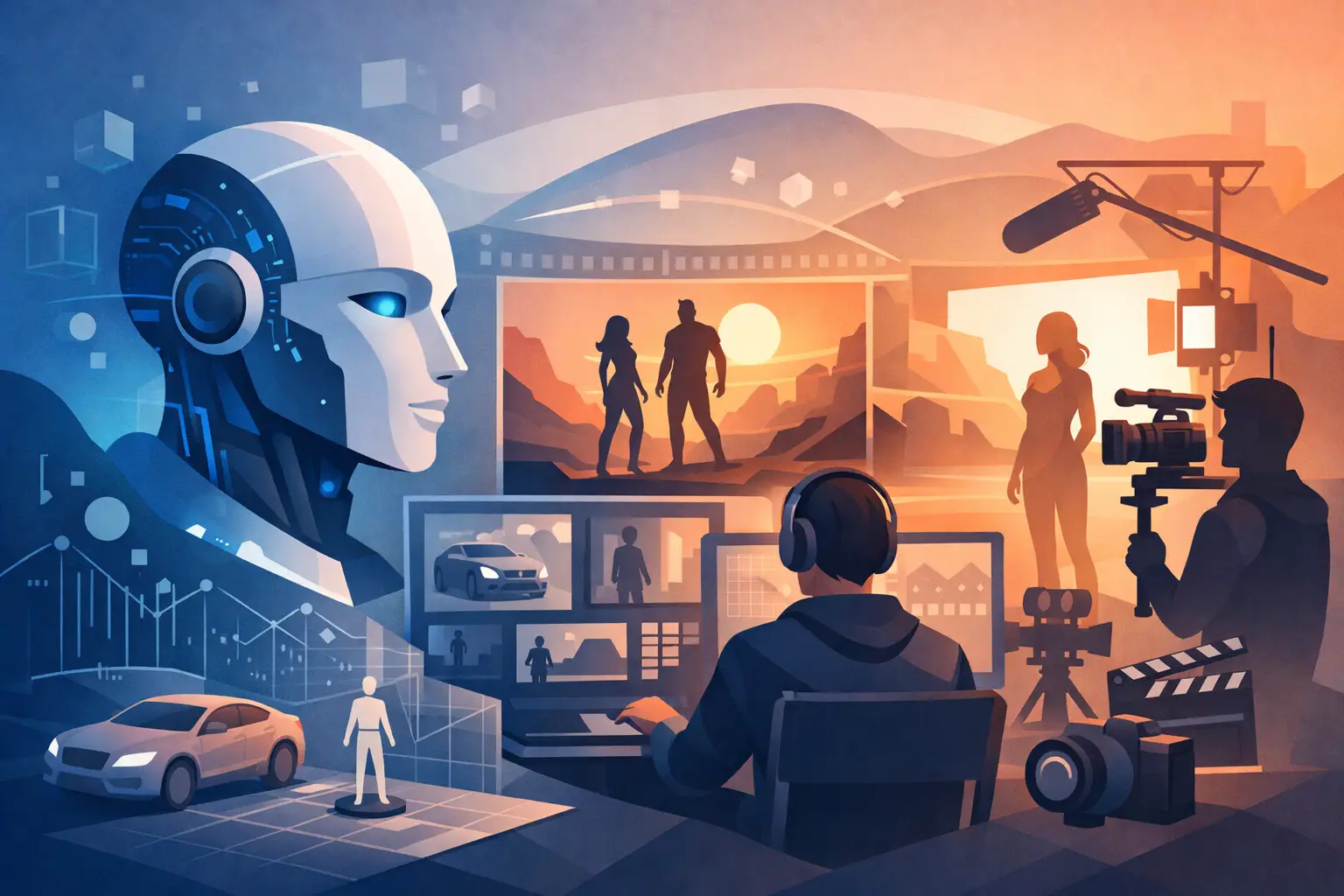
A finished script can still leave an indie film stuck in neutral. The pages are there, the intent is there, but the visual plan often is not. That gap is exactly where ai previsualization for indie films starts to matter. When budget pressure is high and development time is short, turning a screenplay into usable visual and production-facing materials is not a luxury. It is how smaller teams make decisions faster, pitch more clearly, and avoid expensive confusion later.
What ai previsualization for indie films actually changes
For independent productions, previsualization has traditionally been uneven. Some projects get polished concept art, shot boards, and camera plans. Others move forward with a deck, a few references, and a lot of verbal explanation. The result is familiar: producers, department heads, and potential backers are all looking at the same script and imagining different movies.
AI changes that by compressing the early visualization cycle. Instead of waiting weeks for scattered assets from multiple vendors, filmmakers can generate a first-pass visual interpretation quickly enough to use while the project is still actively taking shape. That speed matters because early development is when the most important choices are still flexible. Tone, framing, production scale, character look, and scene design are easier to refine before money starts locking in decisions.
That does not mean AI replaces a production designer, storyboard artist, or cinematographer. It means the team reaches those collaborators with a more concrete starting point. For an indie project, that can be the difference between walking into prep with direction and walking in with guesses.
Why indie teams benefit more than bigger productions
Large studios can absorb inefficiency. Independent films usually cannot. If a concept artist takes longer than expected, if the director and producer are not aligned visually, or if an investor cannot see the movie from the script alone, the delay carries real consequences.
AI previsualization gives indie filmmakers leverage where they need it most. It helps translate abstract intent into materials other people can react to. That includes mood-driven storyboard frames, character interpretations, location looks, camera angle concepts, and rough scene visualization. Even when those assets are not final, they create momentum.
This is especially valuable in three moments. First, during packaging, when the project needs to look like a film rather than read like a draft. Second, during internal planning, when key creative and practical decisions need alignment. Third, during budget discussions, when visual ambition has to be compared against production reality.
In other words, the value is not just aesthetic. It is operational.
Better pitches, not just prettier decks
Many indie filmmakers think about previsualization as a pitch tool, and it is one. A project with visual references, scene frames, and a consistent design language is easier to understand and easier to remember. That matters when you are speaking with producers, financiers, cast, or sales partners.
But the stronger advantage is that visual materials expose weaknesses early. A sequence that reads well on the page may reveal location complexity, cast scaling issues, or tonal inconsistency when turned into boards or concept imagery. That kind of friction is useful. It gives you a chance to fix the plan before it becomes a line item.
Faster decision-making across departments
Indie productions often ask a small team to cover a lot of ground quickly. The clearer the visual brief, the easier it is for department heads to react with precision. Wardrobe can understand silhouette and era. Camera can evaluate coverage ideas. Producers can spot scope creep. Everyone spends less time interpreting and more time solving.
That is where a service model becomes especially practical. FilmPilot.ai is built around this reality, taking a completed screenplay and turning it into a package of fast, actionable pre-production materials rather than isolated creative experiments.
Where AI previsualization works best
The strongest use case for AI previsualization is not final image generation for its own sake. It is structured pre-production support. The goal is to make the next conversation better.
For a contained thriller, that might mean mapping visual tension across a small number of locations. For a sci-fi indie, it may mean defining world cues and character design early enough to keep the scope under control. For a drama, it could be less about spectacle and more about camera language, intimacy, and performance framing.
Projects with limited resources benefit most when AI is used to answer practical questions. What does this scene feel like on screen? How ambitious does this sequence look once visualized? Which moments deserve more production value, and which can be simplified without hurting the story?
If the output helps you prioritize, clarify, or communicate, it is doing its job.
The trade-offs filmmakers should understand
There is real value here, but there are also limits. AI-generated previsualization is only as useful as the script, the framing of the request, and the judgment of the team using it. If a screenplay is still structurally unstable, visual outputs may make weak material look temporarily convincing. That is not progress. It is decoration.
Style consistency can also vary. Some generated frames may capture tone well while others drift. Character continuity may need correction. Spatial logic can look persuasive in stills and fall apart under actual production planning. That is why AI previsualization should be treated as a high-speed first pass, not unquestioned truth.
For experienced filmmakers, this is not a problem. It is a workflow issue. Use the material to accelerate thinking, then apply taste and production sense. The images are there to sharpen decisions, not make them for you.
Good outputs still need human filtering
The best indie teams will use AI previsualization as a creative filter, not a creative substitute. Directors still need a point of view. Producers still need to test feasibility. Cinematographers still need to convert visual intent into executable plans. When that handoff is done well, AI saves time without flattening the work.
When it is done poorly, teams can confuse volume with clarity. A hundred generated images do not equal a visual strategy. A useful package is one that narrows choices, defines tone, and supports production planning.
What to look for in an ai previsualization workflow
Not all workflows are built the same. For indie filmmakers, the right system should begin with the screenplay and move outward into practical outputs. That means scene-level interpretation, visual ideation, shot thinking, and planning materials that can actually be used in prep or pitching.
A strong workflow usually includes storyboard-style visuals, character concepts, camera angle ideas, and some form of production intelligence around scope, scene demands, and budget implications. The speed matters, but so does cohesion. If the materials feel disconnected from the script, they create extra work instead of reducing it.
The more useful model is one that connects creative development to execution. A director wants to see the movie. A producer wants to know what the movie costs. A pitch partner wants to understand the hook immediately. Previsualization is more valuable when it supports all three needs at once.
AI previsualization for indie films is really about compression
The real advantage of ai previsualization for indie films is not novelty. It is compression. It compresses the time between script completion and meaningful visual conversation. It compresses the distance between creative instinct and production planning. It compresses a fragmented process into something that gives filmmakers momentum.
That matters because indie projects are often lost in the gap between promise and preparation. The screenplay exists, but the materials needed to move it forward are missing. When previsualization can be generated quickly and tied back to planning, filmmakers are no longer waiting on a slow chain of separate vendors just to begin seeing the film.
That speed does not eliminate craft. It creates room for craft to happen earlier, with better context.
The indie teams that benefit most will be the ones that treat AI as a serious pre-production tool. Not magic. Not a gimmick. Just a faster way to turn a script into something people can evaluate, refine, and rally around.
If your film is sitting at the point where words are no longer enough, that is usually the moment to visualize it.