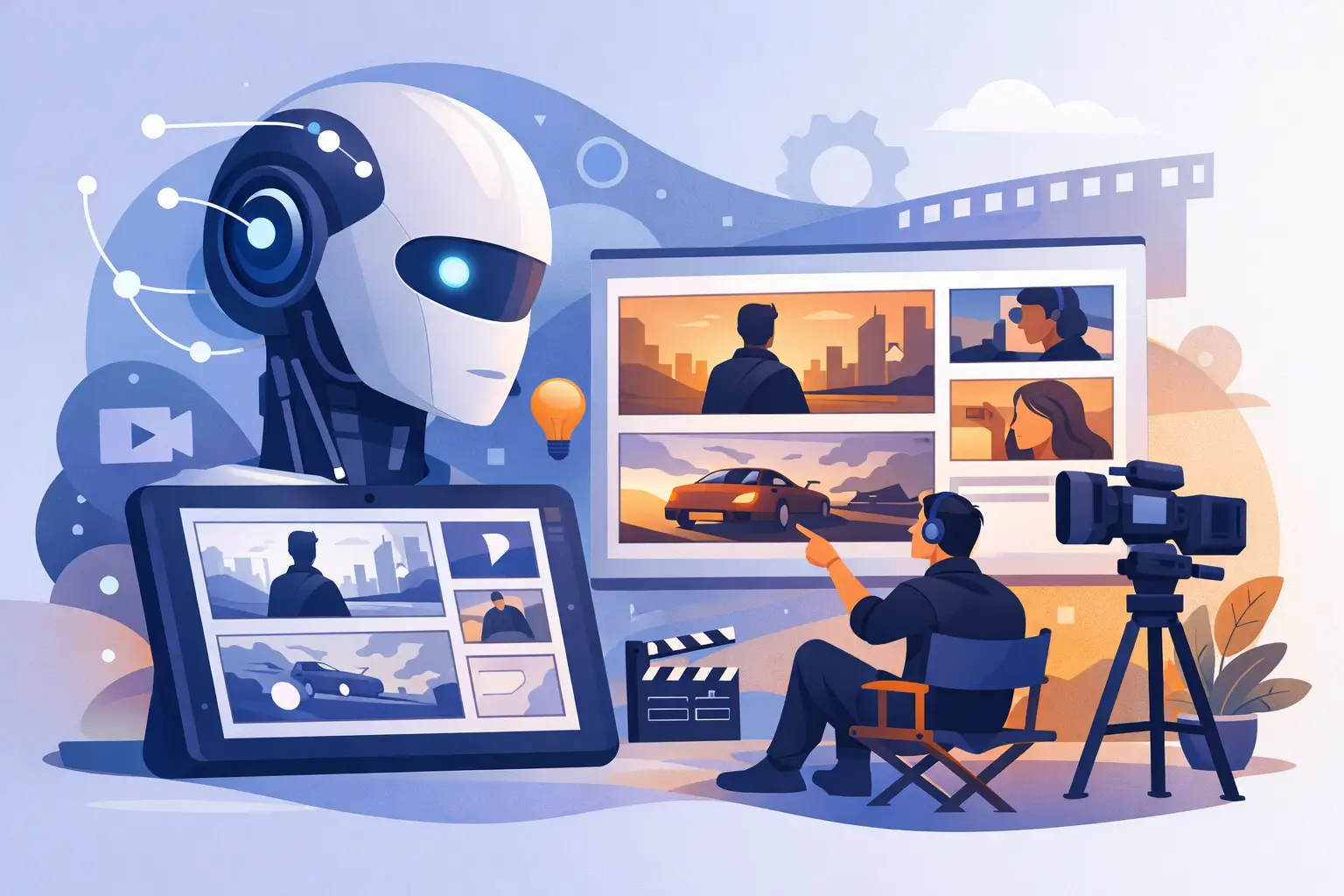
A finished script should create momentum. Too often, it creates a bottleneck instead. Once the draft is locked, the real pressure starts - visualizing scenes, aligning the director and producer, preparing pitch materials, and translating pages into something a crew can actually build. That is where an ai storyboard generator for films becomes useful, not as a novelty, but as a practical pre-production tool.
For filmmakers, the value is not just speed. It is speed with structure. A storyboard generated from a screenplay can help turn abstract intention into frames, sequences, and production conversations while the project is still taking shape. If you are trying to move from script to financing, from development to planning, or from concept to a tighter shooting strategy, that shift matters.
What an AI storyboard generator for films actually does
At its best, an AI storyboard generator for films takes screenplay information and translates it into a visual first pass. That usually means identifying scenes, reading action, detecting mood and location cues, and creating frame concepts that reflect likely composition, character blocking, or shot progression.
The strongest tools do more than create attractive images. They connect visuals to the logic of production. That includes scene-by-scene interpretation, camera angle suggestions, continuity across sequences, and output that can support creative review. A pretty image with no relation to the script is not a storyboard. It is concept art. Useful sometimes, but not the same thing.
This distinction matters because filmmakers are not just looking for inspiration. They are trying to make decisions. Does this scene need coverage or can it play in a wider setup? Does the emotional beat justify a close-up? Can the production design ambition survive the budget reality? A storyboard has value when it helps answer those questions earlier.
Why filmmakers are using AI earlier in pre-production
Traditional storyboarding can be excellent, but it is often slow, expensive, or difficult to access early in development. Independent filmmakers and small production teams know the pattern well. You want boards for a pitch deck, investor conversation, or internal planning session, but full custom artwork may not fit the schedule or budget yet.
That is why AI is gaining traction in pre-production. It gives teams a way to visualize sooner. Not perfectly, and not finally, but early enough to improve the next decision. A producer can pressure-test scope. A writer can see whether a sequence reads clearly in visual terms. A director can begin refining tone and coverage before bringing on every department.
For experienced teams, the appeal is less about replacing specialists and more about compressing the first phase of work. Fast visualization can reduce dead time between screenplay completion and meaningful development materials. That speed is especially valuable when a project is being packaged, revised, or pitched under deadline.
Where AI storyboards help most
The clearest win is alignment. Scripts are interpreted differently by different readers, and even strong screenplays leave room for visual disagreement. A storyboard gives the team something concrete to react to. That changes the conversation from theory to execution.
Pitching is another strong use case. Investors, collaborators, and talent often respond faster to visualized scenes than to script pages alone. A first-pass board can communicate tone, scale, and cinematic intent in a way that speeds buy-in.
They are also helpful in production planning. When scene ideas begin to take visual shape, you can start having smarter conversations about camera strategy, set requirements, costume complexity, and schedule pressure. You may not lock those decisions from AI-generated boards alone, but you can identify likely issues earlier.
For indie productions, that timing advantage is significant. Catching visual overreach before location scouting or shot listing can save money. Catching unclear action before a pitch meeting can save a project.
The trade-offs filmmakers should understand
AI storyboards are not a magic replacement for a director, storyboard artist, cinematographer, or production designer. They are a force multiplier when used in the right phase.
The biggest trade-off is interpretation. AI can infer visual possibilities from the script, but it does not inherently understand subtext the way a seasoned filmmaker does. If a scene depends on restraint, irony, or a highly specific blocking choice, the first output may miss the mark. That is not a failure of the process. It means the material still needs human judgment.
Consistency can also vary. Some systems generate strong individual frames but weaker sequence logic. Others can suggest appealing camera setups without fully respecting geography, character continuity, or production feasibility. That is why filmmakers should treat AI boards as working materials, not sacred documents.
There is also a question of visual style. If every frame feels generic, the tool may save time but flatten the project. The best outcome comes when the storyboard process preserves the script's identity rather than forcing the film into a default aesthetic.
What to look for in an AI storyboard generator for films
The most useful platform starts with the screenplay, not with disconnected image prompts. That matters because film development is built on narrative logic. If the system can interpret scenes directly from the script, the output is more likely to support real pre-production rather than become a separate creative exercise.
You also want more than stills. A strong workflow connects storyboard generation to broader development outputs, such as script analysis, character breakdowns, camera planning, and budget awareness. That combination is where the practical value compounds. A frame is more useful when it lives inside a larger production context.
Turnaround matters too. If the process takes too long, it loses one of AI's clearest advantages. For many filmmakers, the point is to compress weeks of fragmented pre-production work into a much shorter cycle so that decisions happen while momentum is still high.
This is where a service like FilmPilot.ai fits naturally. Instead of treating storyboards as an isolated feature, it positions visual development inside a broader screenplay intelligence workflow. That approach is more useful for filmmakers who need to move quickly from completed script to production-ready materials.
How AI-generated boards fit into a real workflow
In practice, AI storyboarding works best as an early-to-mid pre-production layer. The script is complete enough to analyze, but the visual plan is still flexible. That is the right moment to generate boards, test scene readability, and identify whether the film's ambition matches the available path to execution.
From there, teams can refine. Directors can adjust visual priorities. Producers can flag costly sequences. Cinematographers can challenge or improve suggested framing. If the project moves into formal storyboarding with artists or shot-list development with the camera team, the AI output has already reduced blank-page time.
That sequence is important. AI is most effective when it accelerates the start of decision-making, not when it tries to eliminate collaboration. The output should make creative conversations faster and more informed.
For some projects, especially lower-budget features, the AI-generated boards may cover a meaningful portion of the pre-production need. For others, they are a bridge toward a more customized visual process. It depends on budget, complexity, and how precise the director's visual language needs to be at that stage.
The bigger shift behind this technology
What is changing is not just storyboarding. It is the expectation that a completed screenplay can quickly become a package of usable development assets. Filmmakers no longer have to wait for each pre-production layer to happen in isolation. Analysis, visualization, planning, and pitch support can now happen much closer together.
That changes how quickly projects mature. It shortens the distance between writing and evaluation. It gives producers more material for decision-making earlier. And it gives emerging filmmakers access to tools that used to require a larger network or a larger budget to assemble.
The smartest teams will use that speed carefully. Fast output is only valuable if it improves the next creative or production decision. But when it does, an AI storyboard generator for films becomes more than a convenience. It becomes a practical way to reduce friction at one of the most fragile stages of filmmaking.
If your script is ready, the next step should not take months to become visible. It should start helping you make sharper choices now.