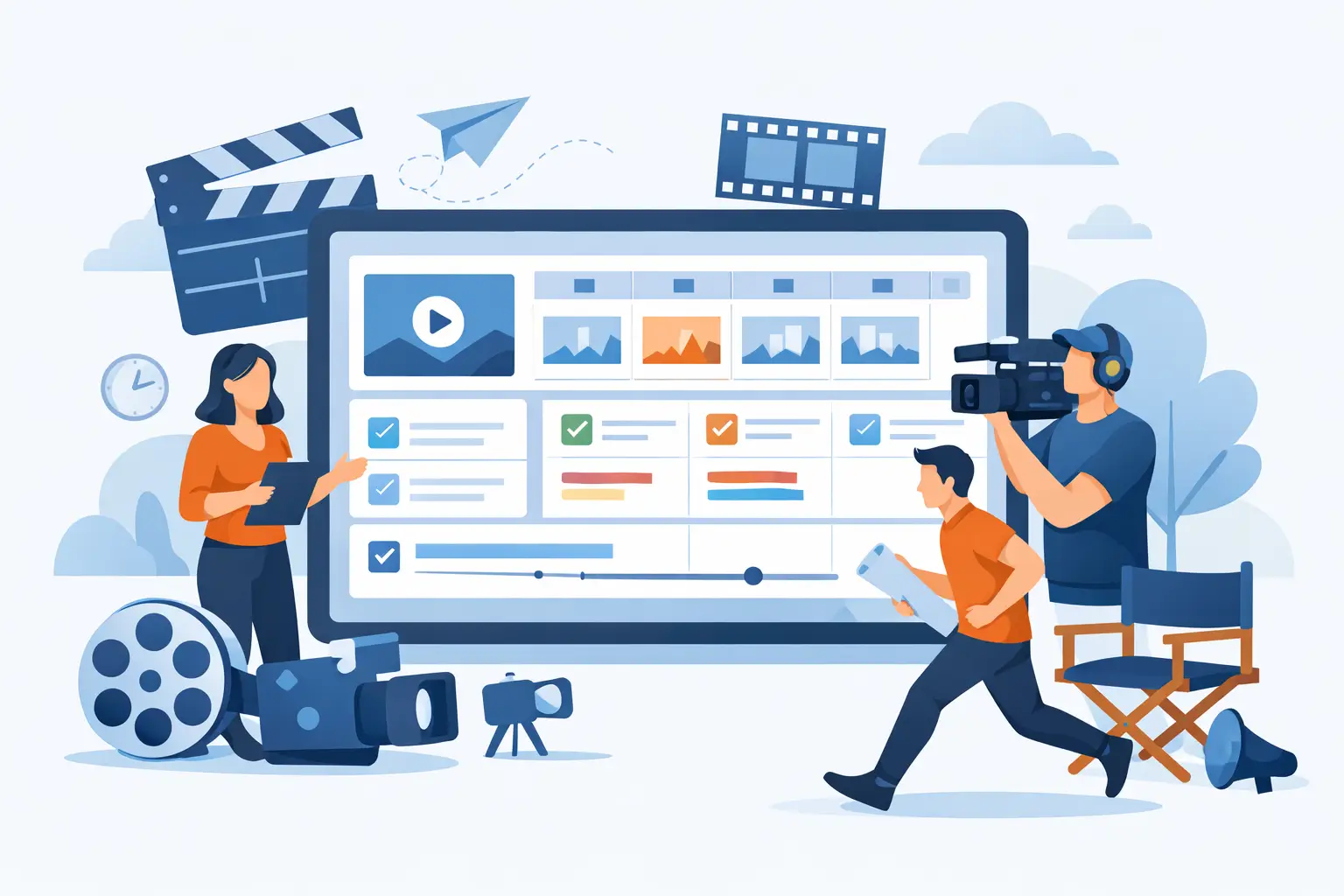
A screenplay is rarely the bottleneck. The slowdown starts right after it is finished, when one document suddenly needs to become a pitch deck, a budget conversation, a visual plan, a casting roadmap, and a production strategy. That is where all in one film planning matters most. It closes the gap between having a script and having a project that can actually move.
For independent filmmakers, producers, and development teams, that gap is expensive. One vendor handles storyboards. Another breaks down characters. Someone else estimates budget ranges. Audience feedback comes later, if it comes at all. By the time those pieces come together, momentum is gone, the team is making decisions with partial information, and the project starts to drift.
All-in-one film planning is not just about convenience. It is about decision quality under real production pressure. When creative development, visualization, and operational planning happen in the same workflow, you make better calls earlier. You see what the film is asking for before the schedule, the budget, and the pitch process start pushing back.
What all-in-one film planning actually means
At its best, all-in-one film planning turns a completed screenplay into a coordinated set of development and pre-production materials. That includes script analysis, character breakdowns, visual references, camera coverage thinking, budget direction, casting support, and early audience insight. Instead of treating these as separate phases handled by disconnected specialists, it treats them as interdependent outputs from the same source material.
That distinction matters. A script is not only a story document. It is also a production document. Every scene implies cost, logistics, casting complexity, visual tone, and pacing risk. If you review those factors one by one in isolation, you miss how they affect each other.
A contained thriller, for example, may read as financially efficient until visual treatment expands the scope. A character-driven drama may seem easy to cast until breakdowns reveal a thin bench of compelling supporting roles. A high-concept genre script may sound strong in the room, but weak audience response to the premise can signal trouble before money is committed. All-in-one planning makes those tensions visible early.
Why fragmented pre-production slows films down
Most projects do not suffer from a lack of ideas. They suffer from handoff delay. Notes move from writer to producer. Visuals wait on freelance availability. Budget assumptions are made before key creative choices are mapped. Casting language is drafted without a clean understanding of character function. Every step adds time, cost, and room for misalignment.
The practical problem is simple. When each output is created separately, every new vendor or collaborator has to re-interpret the script. That means repeated onboarding, repeated explanation, and repeated judgment calls. It also means inconsistencies. The budget may not reflect the visual ambition. The storyboard treatment may not match the intended camera language. The casting notices may not align with the actual tone of the characters on the page.
This is why speed alone is not enough. Fast work that arrives in disconnected pieces still creates friction. What filmmakers need is coordinated speed - materials that are developed together, with the same logic, from the same script.
The real value of all-in-one film planning
The strongest case for all-in-one film planning is not that it replaces every human specialist. It does not, and for larger productions it should not. The value is that it gives filmmakers a high-clarity first pass across the full pre-production picture, fast enough to shape the next move.
That changes how projects advance.
A producer can test whether the script is pitch-ready or still structurally soft. A director can begin thinking visually before spending weeks on concepting. A writer can see whether character definitions are strong enough for packaging. A development executive can review story, audience, and production implications in one pass instead of piecing them together over several rounds.
In practical terms, all-in-one planning reduces the lag between screenplay completion and production readiness. It creates a working package that helps teams answer the questions that always come next: What does this film look like? Who is it for? What will it likely cost? What are the casting needs? How do we present it? What needs revision before money is spent?
All-in-one film planning works best when outputs support each other
A useful planning system is not a folder full of disconnected files. The outputs should reinforce one another.
Script analysis should inform audience positioning. Character breakdowns should strengthen casting notices. Visual storyboards should support camera angle planning. Budget estimation should reflect what the visual package is proposing, not some generic template. If those materials are built in isolation, they can look complete while still being strategically weak.
This is where a unified process has an edge. It creates continuity between the creative and the operational. That continuity is what lets teams move with confidence rather than spending the next three weeks reconciling contradictions.
There is also a pitch advantage here. Investors, collaborators, and internal stakeholders respond better when a project feels thought through from multiple angles. A screenplay alone asks people to imagine the rest. A coherent planning package gives them something concrete to evaluate.
Where speed helps - and where it can mislead
Filmmakers are right to want faster development. Long delays drain energy and can stall financing, casting outreach, and package building. A 24-hour turnaround on core pre-production materials can materially change a project timeline, especially for indie teams managing multiple responsibilities at once.
But speed should not be confused with finality. Fast planning is most valuable when it creates momentum and sharper judgment, not when it pretends every early answer is definitive.
Budget estimation is a good example. Early numbers are useful because they frame the scale conversation quickly. They help determine whether a project fits a microbudget path, a contained indie lane, or a larger financing target. But they are still directional. The same is true for visual concepts and audience insight. They can clarify a path, expose weak spots, and improve communication, but they should still be refined by the right people as the project advances.
The trade-off is straightforward. All-in-one planning gives breadth and speed. Traditional specialist workflows often provide deeper customization later. The smart move is usually not choosing one or the other. It is using integrated planning first to get the film into focus, then bringing in additional specialists where the project complexity justifies it.
Who benefits most from this approach
Independent filmmakers benefit because they often need production-grade materials without production-company timelines or budgets. Emerging creators benefit because they can turn a script into something tangible enough to pitch, refine, and discuss professionally. Producers benefit because they get a faster read on viability. Development teams benefit because they can compare projects with more context and less delay.
Experienced teams also have a reason to use all-in-one film planning. It is not only for first-time filmmakers. When the goal is to pressure-test a screenplay quickly, align internal stakeholders, or prepare a project for the next conversation, a unified package can compress weeks of scattered prep into a usable starting point.
That is why a platform like FilmPilot.ai fits this moment in the market. The value is not abstract AI novelty. It is practical acceleration. One uploaded screenplay becomes a development and pre-production package built to help filmmakers evaluate, visualize, and move.
What to look for in an all-in-one film planning workflow
The best workflow starts with the script and stays anchored to usable outputs. Not flashy theory. Not vague inspiration. Usable materials.
That means the process should answer a few basic questions clearly. What do you upload, and how quickly do you receive results? What deliverables are included? Are they creative only, or do they also support production decisions? Can they help with pitch conversations, budget framing, character definition, and visual planning in one pass?
It also means the outputs should be legible to the people who need them. A writer should be able to use the analysis. A producer should be able to review the planning implications. A director should be able to respond to the visual references. If the materials are too generic, too technical, or too disconnected, they will not save time.
Good all-in-one planning sharpens communication. It gives every stakeholder a common frame for the next decision.
From script to movement
A finished screenplay should create momentum, not a backlog of unanswered questions. All-in-one film planning works because it treats pre-production as a connected system rather than a chain of separate errands. For filmmakers trying to move fast without losing clarity, that shift matters.
The best next step is not always to do more. Sometimes it is to see the whole film sooner, with enough creative and production detail to make the next decision count.