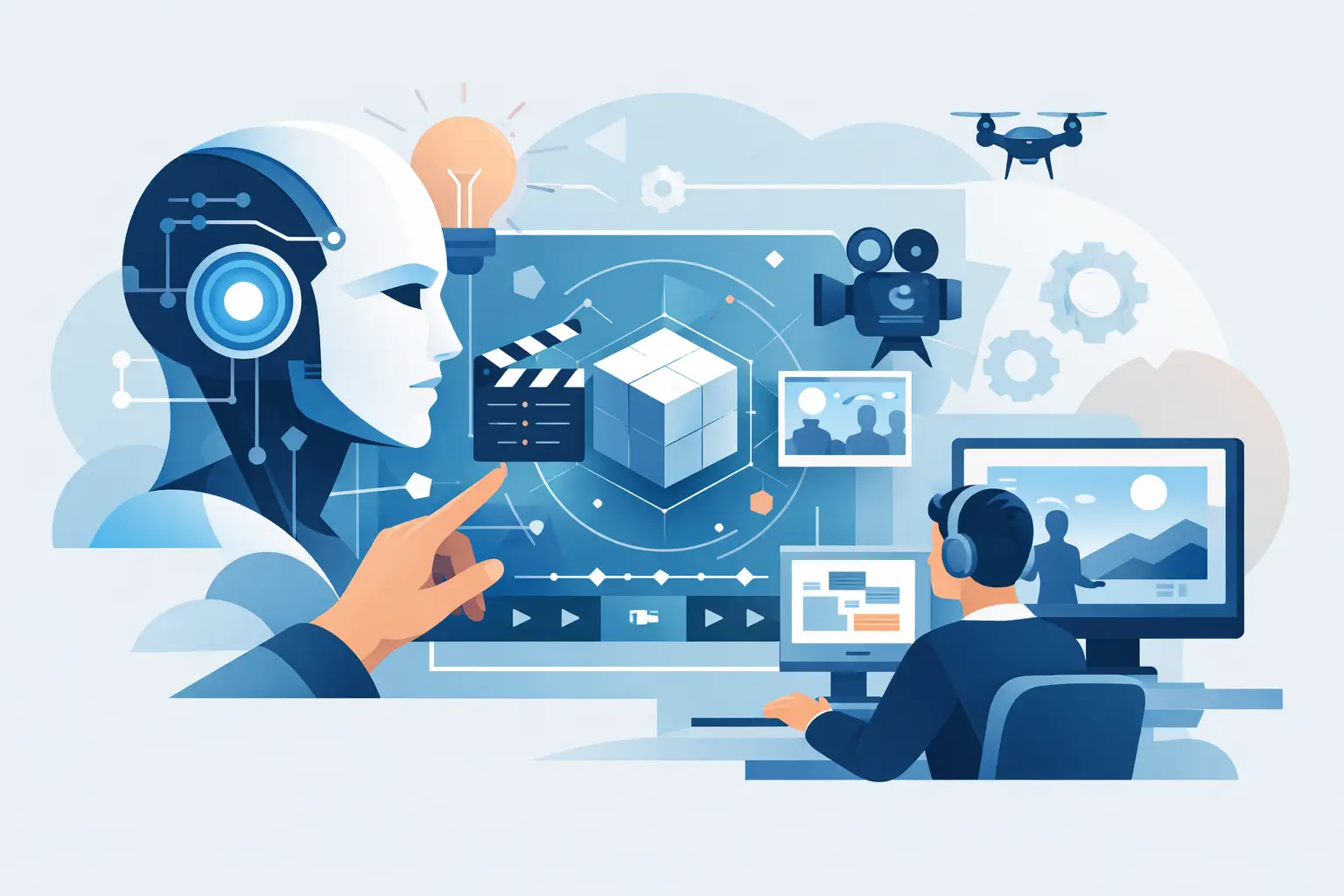
A finished script should feel like momentum. Too often, it feels like a bottleneck. The question is not just why use AI in preproduction, but why keep losing weeks to scattered vendors, slow concepting, and early-stage guesswork when a project needs clarity now.
Preproduction is where creative intent either sharpens into a plan or starts leaking time and money. Producers need practical numbers. Directors need visual direction. Writers need insight into what is landing on the page. Development teams need materials they can use to pitch, package, and schedule. Traditionally, those needs are handled in pieces, across different people, timelines, and budgets. AI changes that equation by compressing analysis, ideation, and planning into a faster, more connected workflow.
Why use AI in preproduction instead of a traditional workflow?
The clearest reason is speed, but speed alone is not the full answer. A faster process only matters if it improves decision-making. In preproduction, AI can do that by turning a screenplay into structured outputs that are immediately useful - visual references, script analysis, budget direction, character breakdowns, and early production planning.
That matters because most delays happen before cameras roll. Teams wait for coverage. Then they wait for boards. Then they wait for concept art, budgeting passes, or casting materials. Each delay creates another decision gap. AI reduces that fragmentation by generating a first pass across multiple development tasks at once, so teams can react to concrete materials instead of abstract ideas.
For independent filmmakers, this can be the difference between a project that advances and one that stalls in development. For production companies and executives, it means evaluating more scripts with greater consistency and less overhead. The advantage is not that AI replaces experienced creatives. It gives them a stronger starting point, faster.
AI makes the script actionable earlier
A screenplay is a creative document, but preproduction demands operational thinking. You need to know what the script requires, where the pressure points are, and how the story translates into production reality. AI helps bridge that gap early.
Instead of reading a script and then manually extracting every practical implication, teams can use AI to surface patterns and needs immediately. That includes scene counts, character presence, tonal shifts, location complexity, likely production demands, and areas that may need refinement before budgeting or scheduling gets serious.
This early translation matters because many projects move into planning with incomplete visibility. A script may read well, but still create hidden production strain. A location-heavy second act, a cast balance issue, or an expensive action sequence can stay vague until much later than it should. AI gives teams a way to identify those issues while there is still room to adjust.
Visualization is one of the biggest reasons to use AI in preproduction
Words on a page do not always travel well across departments. The director may see one film. The producer may see another. Investors and collaborators often need more than a script to understand tone, scale, and market positioning.
This is where AI-generated storyboards, character concepts, poster directions, and camera planning become useful. They turn intention into something visible. That does not mean every image should be treated as final creative truth. It means the team can react to a visual direction sooner, align around a shared language, and refine from there.
Good preproduction is often about reducing ambiguity. Visual materials help do that. They support internal alignment, improve pitch readiness, and give departments a practical reference point before custom design work begins. For smaller teams without the budget or time for a long concepting phase, this can create real leverage.
There is a trade-off, of course. AI visuals can sometimes feel overly polished, too generic, or not fully tuned to the director's taste. That is why the strongest use case is not blind acceptance. It is rapid iteration. AI gives you options quickly, and your team shapes the ones worth keeping.
Better planning starts with better first-pass intelligence
Preproduction usually starts with partial information. That is risky. Budget conversations happen before all assumptions are tested. Casting ideas form before character requirements are fully organized. Shot planning starts while the script is still being interpreted differently by different people.
AI helps by producing structured, readable outputs that support earlier planning. Character breakdowns, casting notices, thematic analysis, audience simulation, location logic, and rough budget estimation all give the team more to work with in less time.
The value here is practical. A producer can look at cost drivers sooner. A director can evaluate visual complexity sooner. A development executive can assess package potential sooner. A writer can see how the material may be perceived by an audience before heading into another draft.
That kind of early intelligence does not eliminate the need for experienced judgment. It improves the quality of the conversation. Instead of asking, "Where do we start?" the team can ask, "Which version of this project makes the most sense to pursue?"
AI reduces fragmentation across creative and production tasks
One of the least discussed problems in preproduction is workflow sprawl. Script notes live in one place. Visual references live somewhere else. Budget assumptions are in a separate file. Casting ideas are informal. Camera thinking begins late. Every handoff creates drag.
AI is valuable in preproduction because it can connect these tasks around the screenplay itself. That creates a more unified development process. The script becomes the central input, and the outputs support multiple decisions at once.
This is especially useful for lean teams. Independent filmmakers often do not have the luxury of assigning separate specialists to every early-stage function. Even when they do, timelines rarely allow for deep sequential work. An AI-assisted workflow can compress that first phase so teams get a broad package of usable materials instead of waiting on one deliverable at a time.
That is part of why FilmPilot.ai is built around the idea of turning one completed script into a practical preproduction asset package. The value is not just automation. It is consolidation.
It helps teams pitch and package faster
A strong script is essential, but scripts alone do not always move projects forward. Financiers, partners, and internal stakeholders often need a more developed presentation to engage quickly. They want to understand the world, the audience, the look, and the production shape of the film.
AI helps create that first layer of packaging. Early visuals, audience-oriented insights, character materials, and budget direction can make a project easier to discuss and easier to evaluate. That is useful whether you are trying to raise funds, attract collaborators, or decide internally whether a project is ready for the next step.
For emerging filmmakers, this can close a credibility gap. For experienced teams, it can reduce turnaround time between script completion and market-facing materials. In both cases, the benefit is momentum.
The best reason to use AI in preproduction is not replacement
There is understandable skepticism around AI in creative work. Some of that skepticism is healthy. Preproduction still depends on taste, judgment, and experience. AI does not know your director's instinct. It does not negotiate locations. It does not build trust with cast or department heads.
What it can do is remove unnecessary delay from the earliest stages of development. It can generate useful first passes, reveal blind spots, and make the script easier to evaluate from both a creative and production perspective. Used well, it supports better human decisions.
That distinction matters. If you expect AI to solve preproduction by itself, you will be disappointed. If you use it to accelerate planning, sharpen communication, and expand what your team can see early, the value becomes obvious.
When AI makes the most sense
AI is especially effective when the project needs quick development materials, when the team is working lean, or when multiple stakeholders need to align around the same script fast. It is also valuable when a screenplay is strong but under-supported by visual, strategic, or audience-facing assets.
It may be less useful if the project is already deep into a fully staffed preproduction pipeline with established department workflows and custom creative development underway. Even then, it can still help with speed and comparison work, but the return may be narrower.
The key is to treat AI as an amplifier. It gives filmmakers more coverage, more visibility, and more first-pass material without adding weeks of delay. In an industry where momentum is fragile, that alone can change what gets made.
The strongest projects do not just start with a good script. They start when the script becomes a plan people can see, test, and act on.