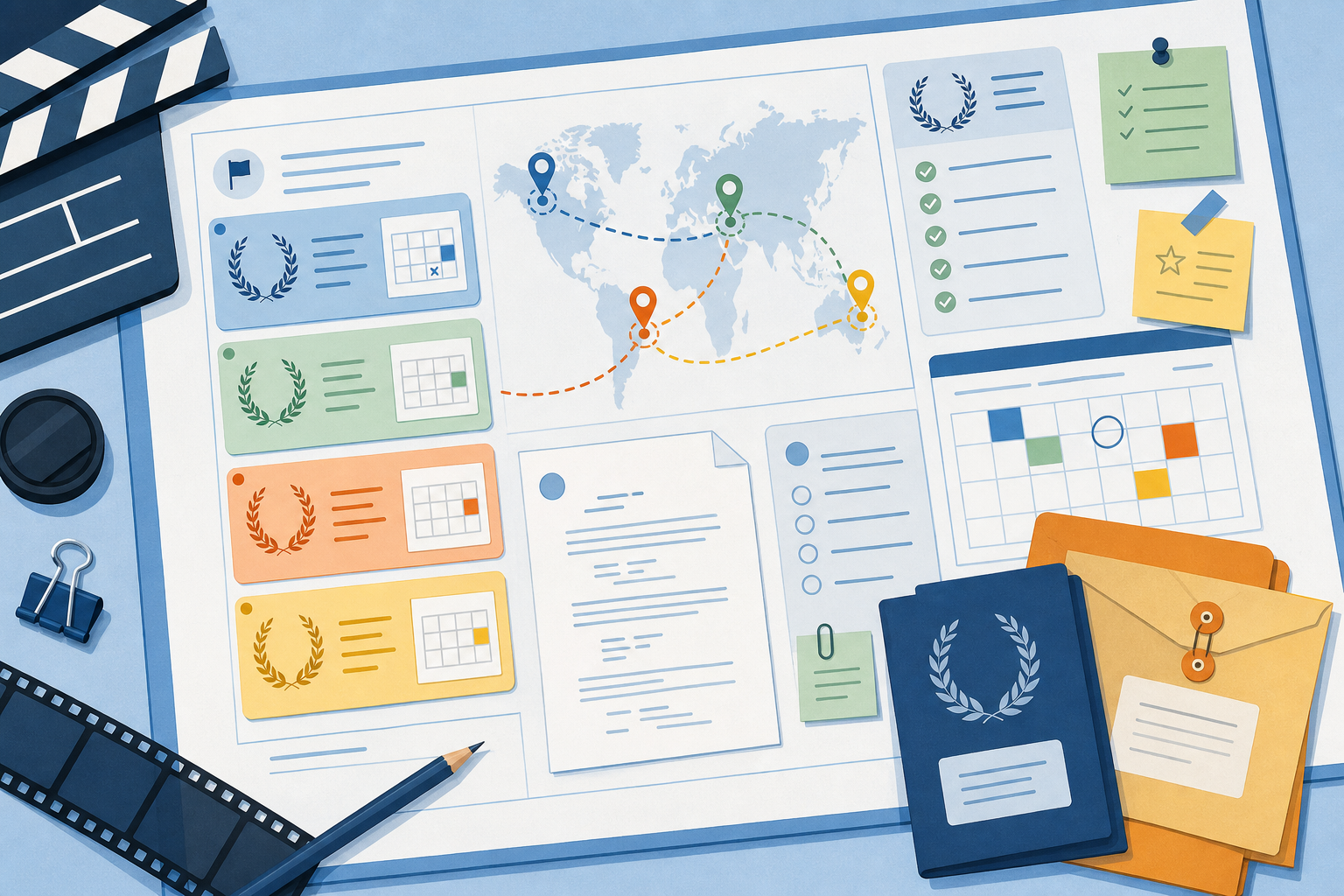
Most indie filmmakers treat festival planning as a post-production problem. That is usually too late. The strongest film festival submission strategy starts in pre-production, when you still have time to shape deliverables, control costs, and build materials that support the release path you actually want.
If your film is aiming for festivals, your prep decisions should reflect that early. A smart pre-production workflow can help you align script choices, budget priorities, visual materials, and packaging assets before the pressure of the final cut arrives.
Why festival strategy belongs in pre-production
Festival runs are expensive, competitive, and time-sensitive. Submission fees add up fast. Premiere status matters. Press materials take work. Screeners, stills, poster art, synopses, and pitch language all need to be ready when deadlines hit. If you only start planning after picture lock, you are usually paying more, rushing harder, and making weaker choices.
Pre-production is the best moment to define where your film fits. That means identifying likely festival tiers, clarifying genre positioning, understanding your audience, and making sure the project can be described clearly in one or two strong sentences. Those decisions influence more than marketing. They affect budget, production design, schedule, and how you present the project to collaborators from day one.
What an indie film festival submission strategy should include
1. A realistic festival target list
Do not submit everywhere. Build a tiered list: reach festivals, strong fit festivals, regional opportunities, and specialized genre or community events. A grounded list helps you estimate total fees, protect premiere options, and avoid the panic of blind submissions later.
2. A budget line for the festival run
Festival costs are not just submission fees. Include screeners, posters, stills, closed captions, DCP or export prep, publicist support if relevant, travel, and contingency. If those costs are invisible during prep, they usually arrive at the worst possible moment. This is why festival planning should connect directly to your budgeting process. If you need a broader budgeting framework, see How to Estimate Production Costs for Film.
3. Positioning for programmers and audiences
Programmers are looking for films they can place clearly. Your team should be able to articulate the film's genre, tone, audience, comparables, and why it belongs in a festival conversation right now. If your positioning is vague in pre-production, it often stays vague through the final submission package.
4. Packaging assets that can be developed early
You do not need a final trailer before the shoot, but you do need a plan for visual assets. Storyboards, concept images, poster directions, character visuals, and concise logline language all help unify the project's identity. That work supports both production communication and festival readiness later. FilmPilot's screenplay-to-package workflow is especially useful here because it can turn one script into planning materials that support both execution and positioning.
How pre-production choices affect festival outcomes
Genre clarity
Films that are hard to categorize are harder to program. That does not mean your work needs to be conventional. It means the intended audience experience should be legible. If the script tone swings unintentionally or the visual language is inconsistent, festival packaging becomes harder because the film is harder to describe.
Length and pacing pressure
Festival programmers watch a large volume of work. Runtime matters. Pacing matters. Even before production, you can identify scenes likely to drag, repeated beats, or budget-heavy sequences that do not materially strengthen the film. Early script analysis helps reduce those problems while change is still cheap.
Production value on an indie budget
Festival success is not only about spending more. It is about putting resources where they will read on screen. Better location choices, stronger visual planning, cleaner wardrobe concepts, and smarter shot coverage can all improve perceived production value. That is one reason so many teams now prioritize integrated prep tools instead of isolated spreadsheets and notes.
A practical workflow for building festival strategy before the shoot
Start with the screenplay
Your script already contains many of the signals that shape your festival path: genre, scope, cast size, tone, locations, visual ambition, and likely audience. Breaking those out early helps you see whether the project plays like a niche regional drama, a genre festival contender, a broad audience indie, or something better suited to labs and markets.
Connect strategy to visuals
Festival positioning is easier when your visual identity is coherent. That is why storyboard planning, camera direction, character imagery, and poster concepts matter sooner than most teams expect. If you need to tighten this part of your prep, How to Turn a Script Into a Storyboard is a useful companion read.
Connect strategy to schedule and cost
Some scripts are festival-friendly in concept but difficult in execution. Too many locations, too many night exteriors, or too many company moves can drain the budget before the film reaches the finish line. Pre-production strategy should pressure-test whether the version on the page can realistically be shot and completed with enough quality left for a serious run.
Build your submission materials in layers
Think ahead about the assets you will need: logline, synopsis, director statement, stills plan, key art direction, audience comps, and a short explanation of why the film matters now. You can draft the backbone of these materials in pre-production, then refine them once the cut is complete. That is far easier than inventing everything under deadline stress.
Common mistakes indie teams make
Waiting until the edit is done
By then, fee deadlines may be close, key materials may be missing, and the budget may already be depleted.
Confusing prestige with fit
A top-tier list is not the same as a strategy. A well-matched genre, regional, or community festival can create stronger momentum than a scattershot prestige approach.
Ignoring the packaging workload
Submission copy, stills, poster art, captions, exports, and deliverables all take time. If nobody owns those tasks early, they bottleneck later.
Separating creative prep from release prep
Festival strategy is not a marketing layer you glue on at the end. It is part of how you design the film's path from script to audience.
Where AI fits in festival-focused pre-production
AI is most useful when it shortens the distance between the screenplay and a usable planning package. Instead of spending weeks stitching together notes, references, and rough visual materials, filmmakers can move faster from script upload to breakdowns, image concepts, storyboards, budget estimates, scheduling support, and festival positioning ideas.
That broader workflow is the real advantage. FilmPilot.ai is built to help indie filmmakers turn a screenplay PDF into a complete pre-production package in about 30 minutes, including assets that support both production decisions and downstream submission strategy. If you are mapping the bigger picture, What Is a Pre-Production Package? explains how these pieces connect.
Build the festival plan before you need it
The best time to start your film festival submission strategy is before cameras roll. When you connect the screenplay, visuals, budget, and release goals early, you give yourself better odds of finishing strong and submitting with intention instead of panic.
If you want a faster way to move from script to festival-ready prep materials, FilmPilot.ai can help generate storyboards, camera angles, budgeting guidance, scheduling assets, and sales or festival strategy support from a single screenplay upload.
Ready to prep your film with the release path in mind?
Explore FilmPilot.ai's packages and turn your screenplay into a practical pre-production system before submission deadlines start closing in.