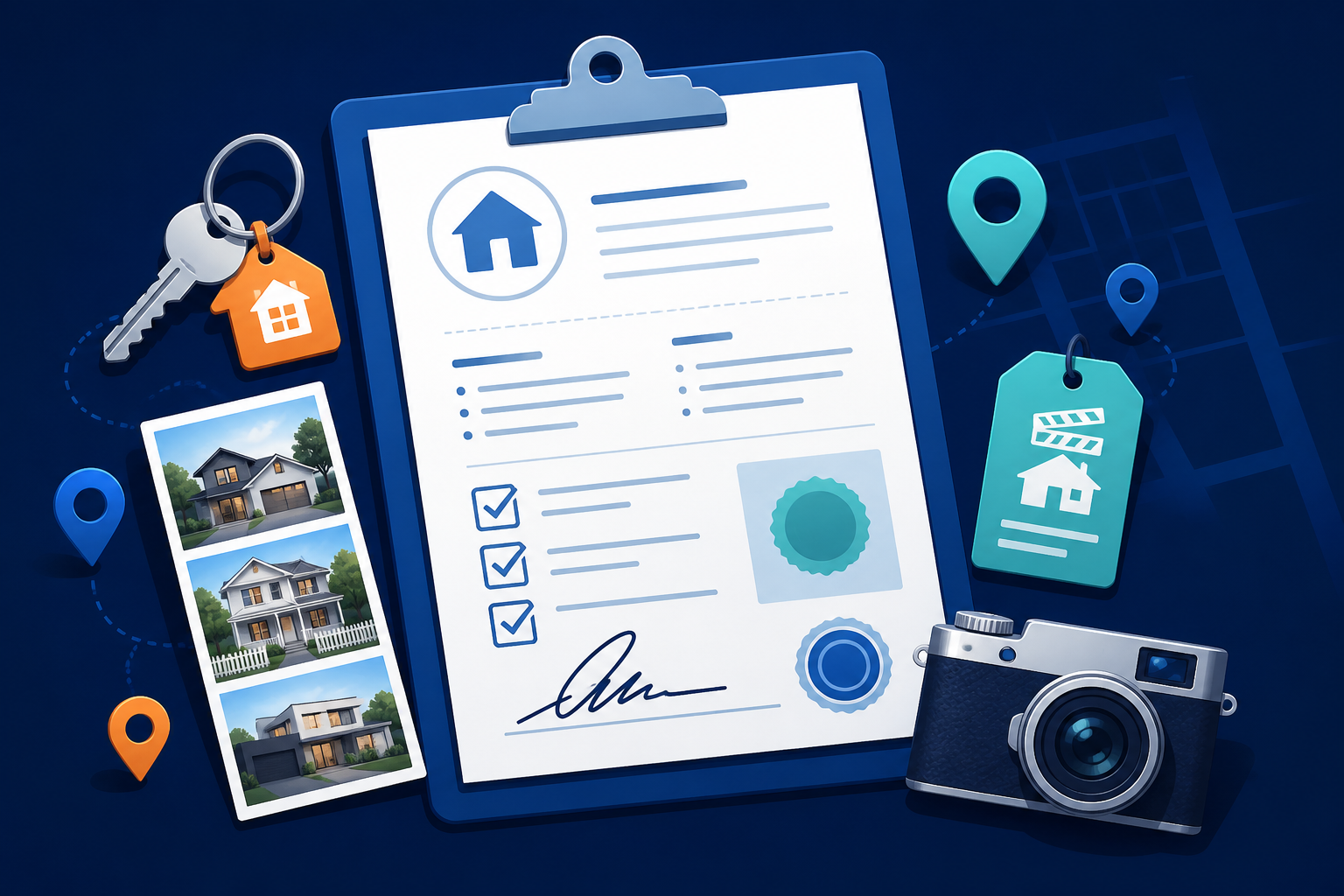
A film location release form is the document that gives you written permission to film on a property. If you skip it, the location that seemed settled during scouting can become a production problem later. If the owner changes terms, questions how footage is being used, or disputes access details after the shoot, you have very little protection without a signed release.
For indie producers, this is not just legal cleanup. It is a practical pre-production step that protects the schedule, the budget, and post-production use of the footage. A location release form works best when it is part of the same planning flow as your script breakdown, schedule, and scout notes. That is where FilmPilot.ai services fit naturally, helping teams move from screenplay to breakdowns, location planning, scheduling, call sheets, and visual prep from one script.
What is a film location release form?
A film location release form is a signed agreement between the production and the property owner or authorized representative. It confirms that your team has permission to film at the location and records the basic terms of that permission.
At minimum, the release should make these points clear:
- who owns or controls the property
- which production is being granted access
- the address and exact areas covered by the release
- the dates and times when filming is allowed
- whether prep, strike, parking, holding, or equipment staging are included
- how the footage can be used
- whether there is a fee, deposit, insurance requirement, or damage process
That sounds simple, but a vague release can still create major friction. If the form says you can film at the property but never clarifies that you also need the driveway for trucks, a room for holding, or permission for exterior signage to appear on camera, you can still get blocked on the day.
Why indie productions need this form earlier than they think
Many small productions wait until the location is basically locked before worrying about paperwork. That is risky. By then, the schedule may already assume the property is available, the scenes may be grouped around it, and cast or crew may be committed to those shoot dates.
A release form should be treated as part of location validation, not as a last-minute attachment. That is especially true if your plan depends on tight location grouping, which is the same logic behind one line scheduling and shooting schedule planning. If the location terms are shaky, the schedule built on top of them is shaky too.
What a strong location release form should include
1. Full property and owner identification
Do not rely on a casual name in an email thread. Record the legal name of the property owner or the person who actually has authority to grant access. Include the full address and any unit, suite, gate, or lot details that matter.
2. Production name and use rights
The form should identify the production clearly and state that the footage, stills, and sound recorded at the location may be used in the film and related promotion. If the release is too narrow, you may create problems for trailers, marketing assets, or festival screeners later.
3. Exact filming window
List the approved dates and hours for prep, shoot, and strike. If overnight gear storage, early crew call, or late wrap is possible, say so directly. Ambiguity on timing is one of the most common ways a location agreement fails in practice.
4. Access boundaries
Spell out what parts of the property are included. Is it only the front room? The exterior only? The backyard, alley, stairwell, rooftop, and parking area too? A release that names the address but not the usable areas can still leave your crew negotiating on the day.
5. Fees, deposits, and damage terms
If there is a location fee, refundable deposit, cleaning requirement, or repair obligation, document it. The same goes for when payment is due and who inspects the property after filming.
6. Insurance and indemnity language
Many owners will ask for proof of insurance. Some will also require named insured language or additional terms around liability. This is where you should use your production's real legal and insurance process, not guesswork. This article is practical guidance, not legal advice, so use counsel when needed.
7. Restrictions that affect the shoot
Note any rules that could change the production plan:
- maximum crew size
- sound limits or quiet hours
- parking limits
- no weapons, smoke, stunts, or practical effects
- furniture movement limits
- areas that cannot appear on camera
- neighbor access requirements
These restrictions should not live only in a text thread. They need to be visible to the AD, producer, and location team.
How to use a film location release form in a real workflow
Start with the screenplay, not the property
Before you send a form, make sure you understand what the script actually needs from the location. Which scenes happen there? Is it interior or exterior, day or night, quiet dialogue or heavy action, one room or multiple spaces? If the screenplay has not been broken down properly, it is easy to request the wrong thing from the owner.
That is why location prep should begin with structured script analysis. FilmPilot.ai helps turn a screenplay PDF into usable production planning outputs, so you are not negotiating locations from memory alone.
Use scouting notes to customize the form
Your release should reflect what you actually learned on the scout. If the owner only controls one floor, if the best camera angle faces a neighbor's window, or if the driveway is critical for gear access, build those facts into the agreement.
If you need a scouting refresher, this location scouting checklist covers the practical issues that usually get missed early.
Connect the approved terms to the schedule
Once the release is signed, update the scheduling logic immediately. If the owner only allows access after 10 a.m., that affects crew call. If you cannot park trucks onsite, that affects company moves. If the space cannot support night exterior lighting, that affects scene grouping.
A release form is not finished when it is signed. It is finished when the approved terms are reflected in your one liner, your shoot schedule, and your daily paperwork.
Simple film location release form checklist
Use this as a practical review list before you lock the document:
- production title is correct
- owner or authorized signer is correctly identified
- full property address is listed
- approved rooms, exterior areas, and support areas are named
- prep, filming, and strike dates and times are clear
- usage rights for the footage are clear
- fees, deposits, and payment timing are documented
- insurance requirements are documented
- special restrictions are documented
- both parties have signed and saved a copy
Common mistakes that create location problems later
Using a generic form without project details
Templates are fine as a starting point, but a generic form that does not reflect your real access needs can create false confidence. If the script requires night work, noise, dressing the space, or multiple shooting zones, the form should say so.
Forgetting prep and strike time
Many disputes happen because the owner agrees to filming hours but not setup or wrap time. If your crew arrives early for lighting and art prep, that needs to be covered.
Not clarifying what can appear on camera
The owner may be comfortable with the kitchen but not family photos, branded art, or certain rooms. If the production assumes everything visible onsite is fair game, you can lose time resetting or reframing on the day.
Keeping the release separate from the production plan
A signed PDF buried in email is not enough. The schedule, call sheet, and key department notes should reflect the location terms so the crew does not accidentally violate them.
Where FilmPilot.ai helps
FilmPilot.ai is useful here because location paperwork is only one piece of a larger pre-production system. The real value comes from connecting screenplay analysis, scene breakdown, location support, schedules, call sheets, and visual planning so the production is working from one source of truth.
That is especially important for indie films where a single location issue can ripple into cast timing, overtime, company moves, and budget pressure. When the screenplay has already been translated into clearer planning assets, the location release process becomes faster and less error-prone.
Lock the permission before you lock the day
If a location matters enough to schedule, it matters enough to document correctly. A film location release form should not be the last thing you think about after scouting. It should be one of the tools that confirms the location is truly usable for the production you are planning.
That mindset saves money, prevents last-minute surprises, and gives the crew clearer boundaries before the trucks arrive.
Ready to turn your screenplay into a more production-ready package?
If you want help moving from script to breakdowns, location planning, schedules, call sheets, and visual prep without stitching the workflow together by hand, FilmPilot.ai can help.